
An implant replaces the whole tooth, root included. That is why it takes months rather than days: bone has to grow around the titanium before it can carry a crown. This is the usual sequence.
1. Consultation and 3D scan
We examine your mouth and take a cone beam CT scan. It shows how much bone there is and where the nerves and sinuses lie. With that we can say whether an implant is possible straight away, or whether the bone needs building up first.
2. Planning
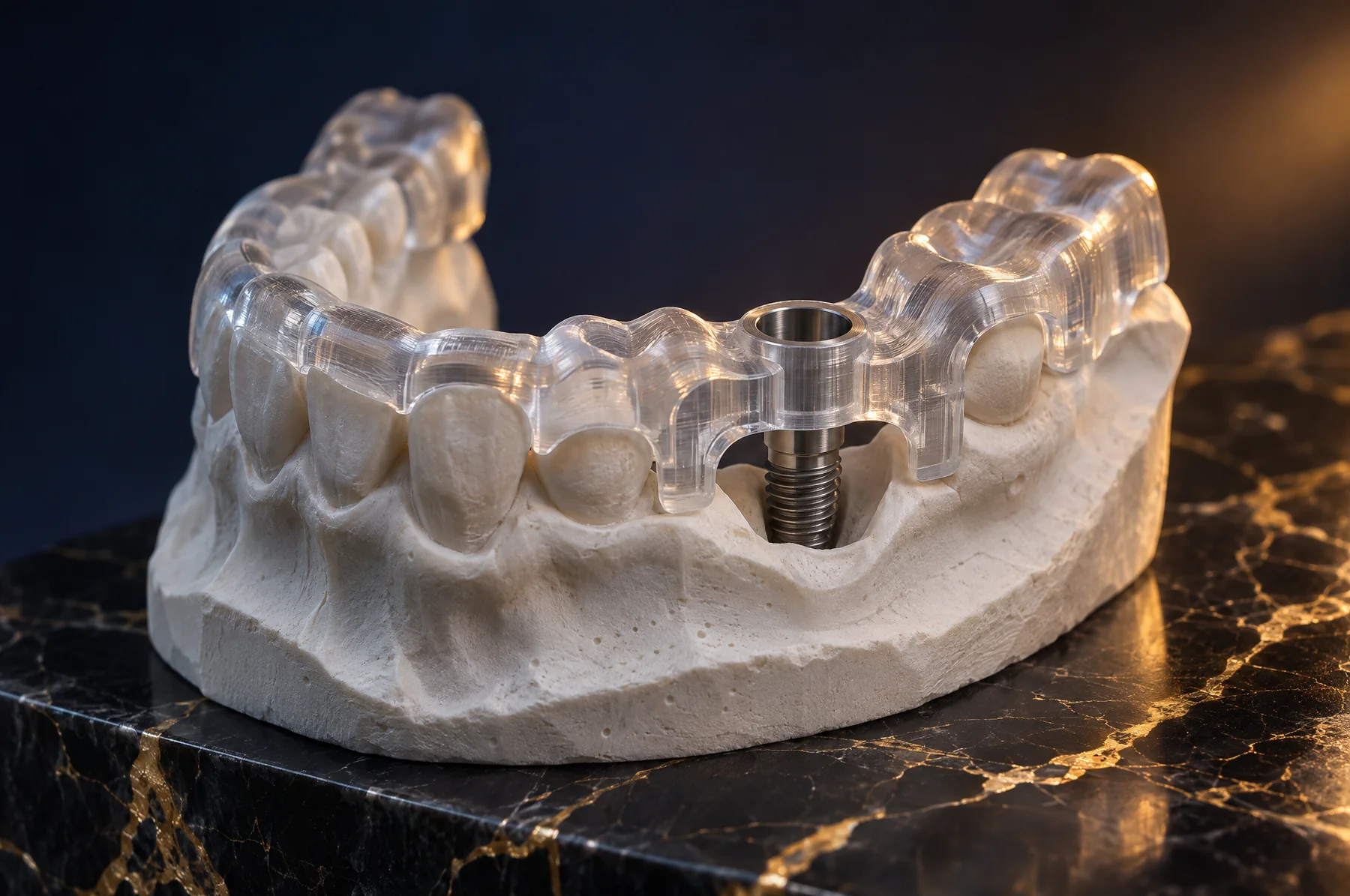
The implant is positioned on the scan before anyone touches your mouth. From that plan we print a surgical guide, a small template that sits over the gum and steers the drill to the planned angle and depth.
3. Placement
The implant is placed under local anaesthetic. Most people are surprised by how little they feel. Some swelling over the following days is normal and passes on its own.
4. Healing
Over the next three to six months the bone bonds with the implant. If the gap shows when you smile, you wear a temporary tooth in the meantime.
5. Abutment and crown
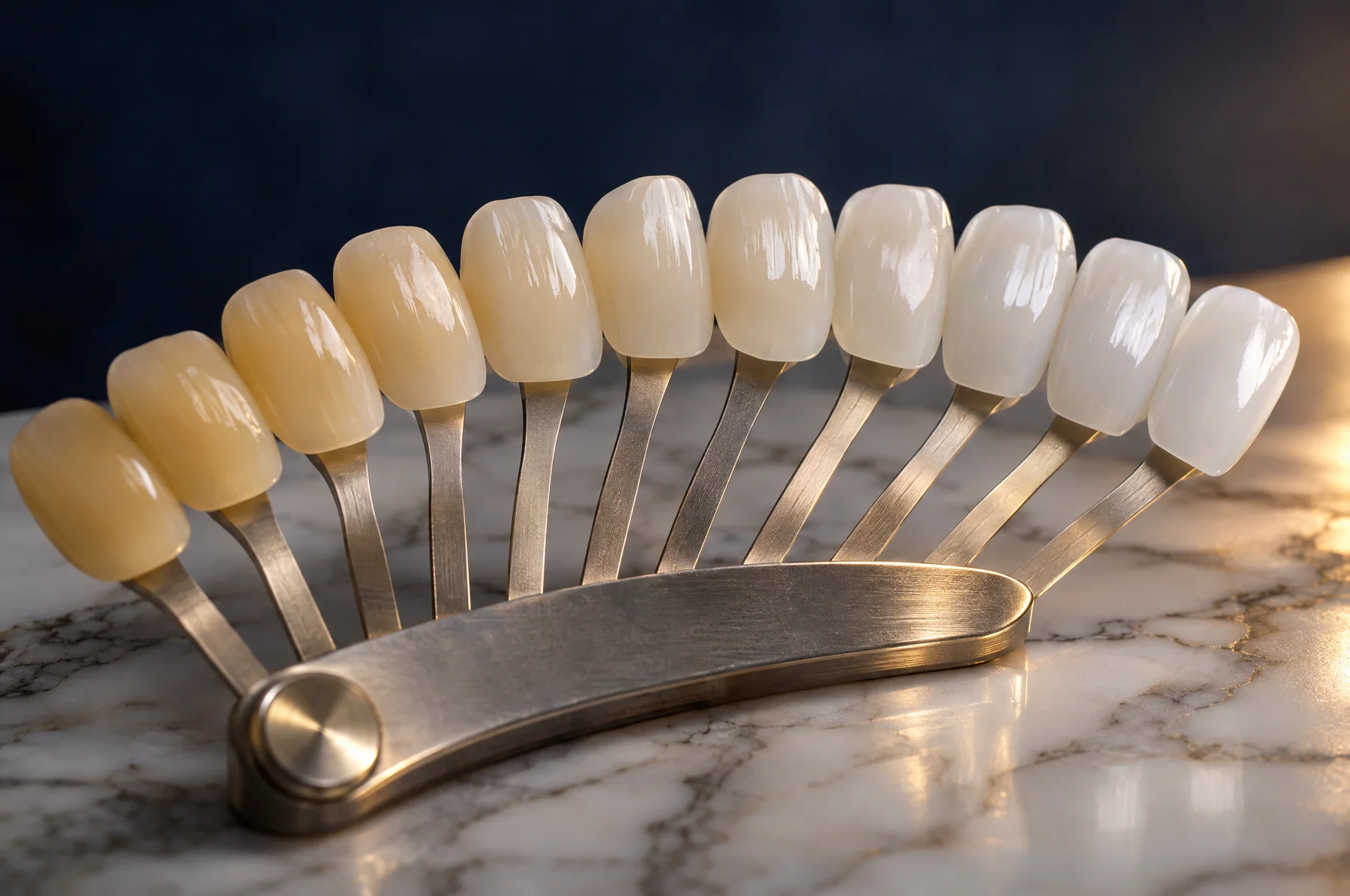
Once the implant is firm, we attach the abutment and scan for the crown. The ceramist matches colour and translucency to the neighbouring teeth, and the crown is fitted about two weeks later.
What can delay it
- Too little bone, which may need a graft first
- Smoking, which slows healing
- Untreated gum disease, which has to be brought under control beforehand
This article is general information, not a diagnosis. For advice on your own case, book a consultation.