
All whitening products rely on peroxide, which breaks down the pigments that stain enamel. What differs is how much of it there is, how long it stays on the tooth and how well the gums are protected.
What strips can do
Strips contain a low concentration and sit loosely on the teeth. Over a couple of weeks they can lift surface stains by a shade or two. They often miss the curved edges and the gaps between teeth, so the result can be patchy.
What in-clinic whitening adds
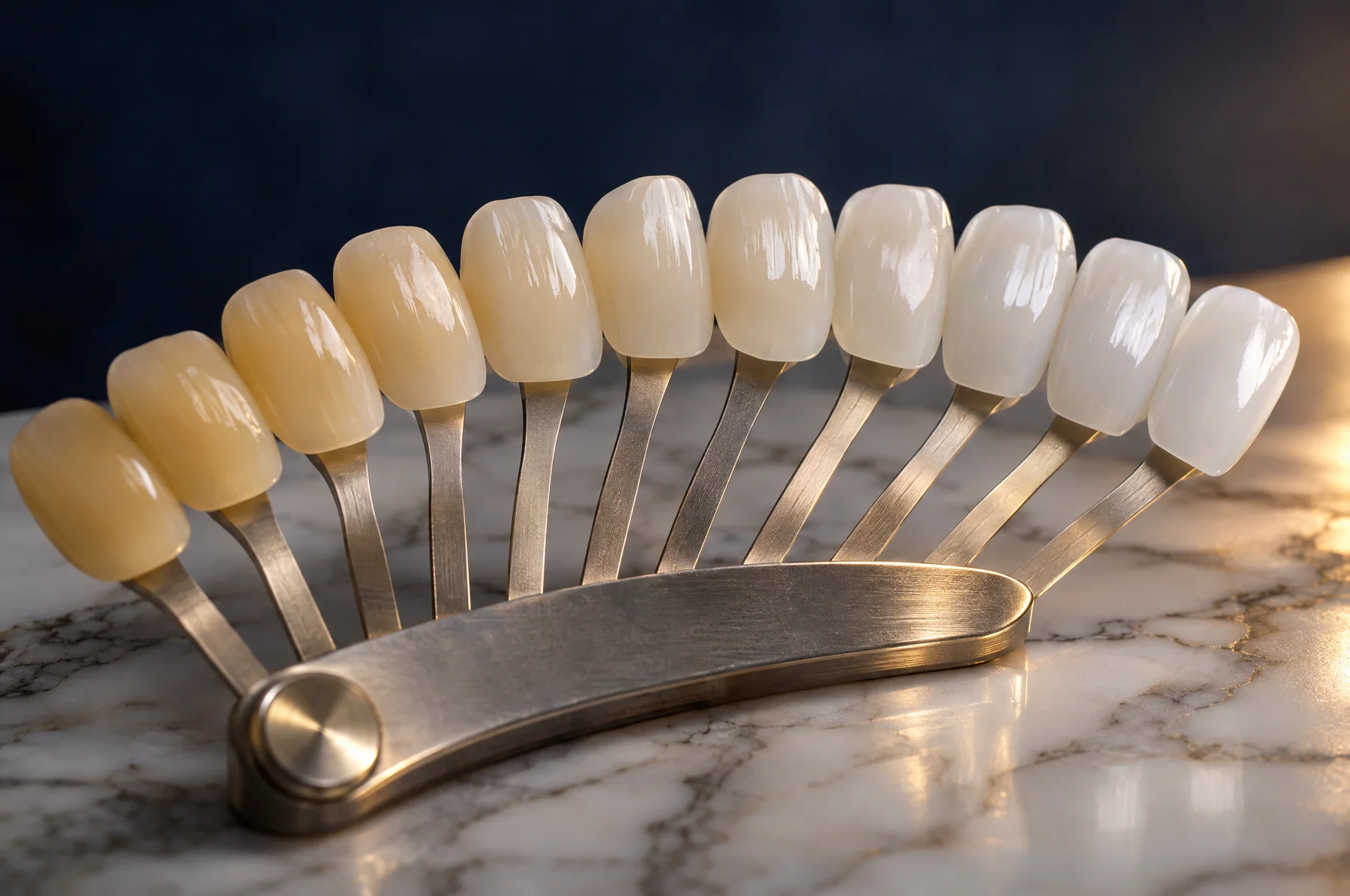
In the clinic the gums are covered first, so a stronger gel can be used safely. One session usually lightens teeth by several shades, and the result is even because the gel is applied tooth by tooth.
If your teeth are sensitive
Tell us before we start. We can use a gentler gel, shorten the rounds and give you a desensitising paste to use for a few days before and after.
What whitening does not change
- Crowns, veneers and fillings keep their colour
- Grey staining from inside the tooth responds poorly
- Decay and gum inflammation need treating first
How long it lasts
Typically one to three years, and less if you smoke or drink a lot of coffee, tea or red wine. A short top-up brings the shade back.
This article is general information, not a diagnosis. For advice on your own case, book a consultation.